Showing posts with label best of week. Show all posts

Tuesday, September 25, 2012

Dolphin giving birth


Here's a rare look at dolphin birth, from Dolphin Quest Hawaii at the Hilton Waikoloa Village. Jump to 17s for the main event.


Video Link [The Telegraph (h/t CSM )]


via Boing Boing http://boingboing.net/2012/09/25/dolphin-giving-birth.html?utm_source=feedburner&utm_medium=feed&utm_campaign=Feed%3A+boingboing%2FiBag+%28Boing+Boing%29

The Jetsons: 50 years later


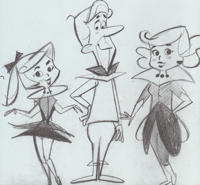
Fifty years ago this week, The Jetsons premiered. It only lasted 24 episodes (not including the mid-1980s "revival"), but it truly embodied the tech optimism of the time. In the world of professional futurism, The Jetsons (like a lot of science fiction) can be a great provocation for discussion. For example, every episode is filled with examples of futuristic tech that never happened, at least in the way that we imagined them in the 1960s. (Roomba vs. Roomba!) Clips of The Jetsons are also a fun way to draw out insights about the history of the future and why certain visions of tomorrow caught on at specific points in history. Over at Paleofuture, Matt Novak is has launched a series of posts titled "50 Years of the Jetsons: Why The Show Still Matters." His introductory post and recap of the first episode ("Rosey the Robot") are fantastic. From Paleofuture:


NewImage“The Jetsons” was the distillation of every Space Age promise Americans could muster. People point to “The Jetsons” as the golden age of American futurism because (technologically, at least) it had everything our hearts could desire: jetpacks, flying cars, robot maids, moving sidewalks. But the creators of “The Jetsons” weren’t the first to dream up these futuristic inventions. Virtually nothing presented in the show was a new idea in 1962, but what “The Jetsons” did do successfully was condense and package those inventions into entertaining 25-minute blocks for impressionable, media-hungry kids to consume.

And though it was “just a cartoon” with all the sight gags and parody you’d expect, it was based on very real expectations for the future. As author Danny Graydon notes in The Jetsons: The Official Cartoon Guide, the artists drew inspiration from futurist books of the time, including the 1962 book 1975: And the Changes to Come, by Arnold B. Barach (who envisioned such breakthroughs as ultrasonic dishwashers and instant language translators). The designers also drew heavily from the Googie aesthetic of southern California (where the Hanna-Barbera studios were located)—a style that perhaps best represented postwar consumer culture promises of freedom and modernity.


"50 Years of the Jetsons: Why The Show Still Matters"


via Boing Boing http://boingboing.net/2012/09/25/the-jetsons-50-years-later.html?utm_source=feedburner&utm_medium=feed&utm_campaign=Feed%3A+boingboing%2FiBag+%28Boing+Boing%29

Thursday, September 13, 2012

Create an eBook from online content

The world of educational resources and materials is shifting away from print stuff towards digital stuff. One of the reasons for this shift is the ease of creating and sharing digital stuff.


ePUBS and tablets and apps like iBooks are merging into a mini-Perfect Storm event that supports and encourages the use of digital content. As social studies teachers, we need to take advantage of these sorts of tools.


And I just ran across an incredibly easy to use online tool called Readlists that lets you create an ePUB book from resources that you find on the web. Imagine being able to create a digital book that has a variety of articles, data, and multimedia.


Readlists is the latest project of the Arc90 people – the same people who created Readability.


The process is simple:


  • Go to Readlists

  • Paste URLs of articles or websites that you want to share with others

  • Give your list a description and a title

  • Send the book to the device of your choice (Kindle, iOS, Readmill, email, or download to desktop)

  • If desired, you can share your ePUb via social media like Twitter and Facebook or on websites.


You can also create an editable list that allows other users to add additional content to the list.


My example? An eBook of social studies and Common Core resources via an ePUB format or website. You could use Readlists to create course packets, collections of primary source documents, and reading assignments.


The beauty of all of this, of course, is that you can create content for your kids to use that becomes mobile – anywhere and anytime. Kids can access this on eReaders, cell phone browsers, or iBooks. But it’s not just you pushing content out to kids. It could be kids pushing content back to you as part their assignments, research, and projects.


Very cool stuff indeed!


Filed under: 21st century skills, apps, cell phones, common core, cool, ipad, ipod, media literacy, strategies, technology integration, Web 2.0


via History Tech http://historytech.wordpress.com/2012/09/13/create-an-ebook-from-online-content/

Wednesday, September 12, 2012

The toughest lesson of the year


Teaching about 9/11

Today is the eleventh anniversary of the September 11th terrorist attacks and, while it is unlikely to receive the national attention associated with last year’s decennial, teachers around the nation are tackling one of the most challenging lessons of the year. How do we teach about 9/11? The question will not grow easier with time, as most high school students aren’t even old enough to remember a day adults will never forget. That puts even greater pressure on educators to get it right. Last fall, Fordham published a collection of essays on the subject by noted scholars, journalists, educators, and public officials that we hope will help guide teachers and citizens as we try to faithfully remember and educate about the events of that day.


Also, be sure to watch Fordham Institute President Chester E. Finn, Jr. reflect on the issue:


via The Education Gadfly Daily http://www.edexcellence.net/commentary/education-gadfly-daily/flypaper/2012/the-toughest-lesson-of-the-year.html?utm_source=feedburner&utm_medium=feed&utm_campaign=Feed%3A+flypaper+%28The+Education+Gadfly+Daily%3A+Ideas+that+stick+from+the+Fordham+Institute%29

We Bridged Our Differences

Dear Deborah,


We started this weekly exchange of letters more than five years ago, to what must have been the shock and amusement of those who knew both of us. We were supposed to be at opposite poles of the education debates of the day, so there was a certain logic to the idea that we might engage in "Bridging Differences."


I remember when we first began this journey. In the fall of 2006, we were invited by New York University to discuss the changes in the New York City public schools. We met for lunch to talk about what we would say. We surprised each other as we learned that we were both appalled by the heavy-handed, ham-handed manner in which ill-considered accountability measures were imposed on the schools. We each had our list of grievances, and we resolved to write an article together.


The writing process took some weeks, as drafts went back and forth between us. I had to learn to cope with your unique approach to orthography. When the article was finished, it was published in Education Week. Some enterprising editor proposed that we should turn our collaboration into a blog, and here we are five-plus years later.


I reflect on our beginnings now because I have decided to end my participation in the blog. (See Editor's note below; the Bridging Differences blog will continue.) Several months ago, Jay Mathews of The Washington Post suggested that we needed a new format because we had stopped disagreeing. But that's not my reason for leaving.


I'm leaving because I started my own blog in April, and it is taking up all my blogging energy. I'm now posting anywhere from 10-20 items daily. Whereas I used to devote 1/2 a day each week to writing my letter to you, I now spend two-three hours daily on my blog, seven days a week. And did I mention that I started writing a book in mid-June?


I have found or created a large community of educators from across the nation and around the world. In the months since I launched the blog, it has had close to 1 million page views. Many of the posts I publish are comments by teachers, parents, school board members, and others, reacting to events and issues as they discover they are not alone. I learn from my readers about what is happening in their schools, their communities, and their cities. And I love sharing what I learn.


As I leave Bridging Differences, let me express what it has meant to me.


I have come to have a deep and abiding respect for your wisdom. You manage to bring almost every issue back to the fundamental question of democracy. You constantly remind readers how important is the respect that people express toward each other in their daily practices. Your ideas about habits of mind, trust, inquiry, thinking, and living your beliefs remain fresh and relevant.


Over these past five years, I have developed a keen respect for the practitioners in our nation's schools. The more I understand of the challenges they face every day, the more cognizant I am of their ability to do what I cannot do. Thus, I can never again look at the issues of the classroom from the perspective of 30,000 feet in the air, as I once did and as so many of my former think tank colleagues, academics, and policymakers in government still do.


When we began, I was viewed by many as a representative for conservative ideas about testing, choice, and accountability. As our dialogue continued, my views evolved, right here on this blog, and in 2010 I published a book renouncing those ideas. I have often said, half in jest, that you won me over and that over time you could change almost anyone's mind, if they were willing to listen.


But the blog changed me in other ways. For one, I learned an informal, conversational way of writing. I became comfortable writing in the first person, expressing my thoughts without jargon or footnotes.


And I learned about Internet social behavior. I met many new friends, and I realized there would always be people who use anonymity to write hateful things. I learned to ignore them.


Some time ago, you asked what keeps me going. I responded that I was motivated by the outrageous attacks on teachers and public education. I still am.


I am also energized to speak out against the well-funded effort to spread misinformation about the status, condition, and progress of American public education. The goal of this false narrative is to destroy the public's faith in one of its most essential public institutions. To the extent this narrative succeeds, it makes possible the privatization of a growing segment of education. Privatization advocates call themselves leaders of the civil rights issue of our day, but you know that privatization always produces more inequity, not less.


Here is something to reflect on: the NAEP scores of students who are black, white, Hispanic, or Asian are at their highest point in history. The proportion of young people between 18-24 who have graduated high school is close to 90 percent, another historical high point. Those who rail about the decline and failure of American education are either misinformed or they obfuscate or prevaricate.


There is so much work to be done to stop the destructive attacks on teachers, principals, and public education. There is so much work to be done to change our schools for the better. The media attack machine distracts everyone from the real reforms that are needed.


I will continue in that work, and I know you will too.


In closing, I want to thank Mary-Ellen Deily, who has edited our blog with patience and good humor, and thank Education Week for hosting it.


Diane


Editor's note: Deborah Meier will continue to blog for Bridging Differences, along with a yet-to-be-named blogging partner. Deborah's next post will appear on Thursday, and Education Week will announce her co-blogger shortly. Stay tuned, and thank you to Diane Ravitch for five important and thought-provoking years on Bridging Differences.


- Diane Ravitch


via Bridging Differences http://blogs.edweek.org/edweek/Bridging-Differences/2012/09/we_bridged_our_differences.html?utm_source=feedburner&utm_medium=feed&utm_campaign=Feed%3A+BridgingDifferences+%28Education+Week+Blog%3A+Bridging+Differences%29

Sunday, June 17, 2012

The Tiny Guide to Being a Great Dad


Post written by Leo Babauta.

I am blessed with six wonderful children and a fantastic and lovely wife, and for this I am deeply grateful. But on a day like today, a lazy Sunday morning when my family is sleeping in and the soft light of the morning permeates the house, I reflect on what it’s like to be a dad.


Not just a dad … a great dad. This is a height I don’t always reach, but I believe I do inhabit that space sometimes. I’m a great dad, on my best days.


If you’re curious about my thoughts, as a dad of 19 years that has included countless sleepless nights, endless answering of questions, thousands of nursery rhymes sung and horsey rides given, hundreds of thousands of words read in children’s books, more than my share of wiping up spitup, poopie butts and much more … here is my offering to the world.


Don’t worry, it’s a fairly simple guide.


The Three Rules


There are only three things you need to do to be a great dad:


1. Be there. If you’re in their lives, you rock. If you’re there when they scrape their knee, lose their first tooth, need someone to cry to, need help with their school project, want a partner for playing house or hide-and-seek … you are already being a great dad. Be there, when they need you, and when they don’t.


2. Love them. They will know you love them, if you love them fully. It will show in your smile, in your touch, in your good-morning hugs. But also tell them on a regular basis. Infuse all your dad actions with love.


3. Be present. It’s great to be in the same room with them, but as much as you can afford to, be fully present with them. Shut off the mobile device, close the laptop, turn off the TV, and really pay attention. Listen to their long fragmented stories. Really watch when they want to show off their new wizard or ninja move.


That’s it. That’s all you need to be a great dad. Well, there are some bonus moves, but those are just extensions of the above three.


The Bonus Moves


If you want some specifics of how to do the above three rules, here are some ideas:


  1. Sing with them.

  2. Run around with them.

  3. Make believe with them.

  4. Read to them daily.

  5. Dance with them.

  6. Tell them corny jokes.

  7. Paint with them.

  8. Make videos where they are the star.

  9. Set a healthy example by being active and eating well.

  10. Show them how to be independent.

  11. Teach them critical thinking, rather than just obedience.

  12. Teach them how to teach themselves.

  13. Don’t nag.

  14. Don’t be overprotective.

  15. Show them you’re proud of them.

  16. Let them make mistakes.

  17. When they get hurt, use that moment to teach them how to deal with pain.

  18. Show interest in what they’re interested in, and don’t make it seem trivial.

  19. Show them how to work passionately.

  20. Spend some quiet cuddly time with them.

  21. Make them pancakes with faces.

  22. Have Nerf dart gun fights.

  23. Play board games.

  24. Take them on hikes.

  25. Play sports with them.

  26. Show them how to use a knife.

  27. Be honest.

  28. Honor your commitments.

  29. Love your wife, and treat her with respect.

  30. Be compassionate to others, and them.

  31. Be happy with yourself.


via zenhabits http://zenhabits.net/great-dad/

iThoughtsHD for iPad


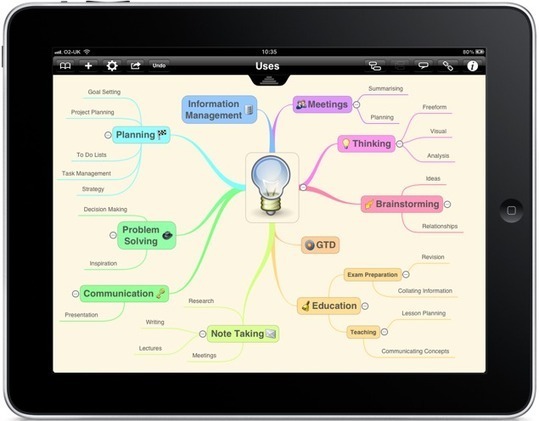
iThoughtsHD brings mind mapping to the iPad. Based on the award winning iThoughts for iPhone, iThoughtsHD has been designed specifically for the iPad.


via Digital presentations in education | Scoop.it http://www.scoop.it/t/digital-presentations-in-education/p/1977005322/ithoughtshd-for-ipad